Whole watershed testing program set for Nov. 19-20 in Lampasas
Residents can test well water and soil, learn best practices and earn continuing education units
The Lone Star Healthy Streams, LSHS, and the Texas Well Owner Network, TWON, will host a free water well screening and results meeting on Nov. 19-20 in Lampasas.
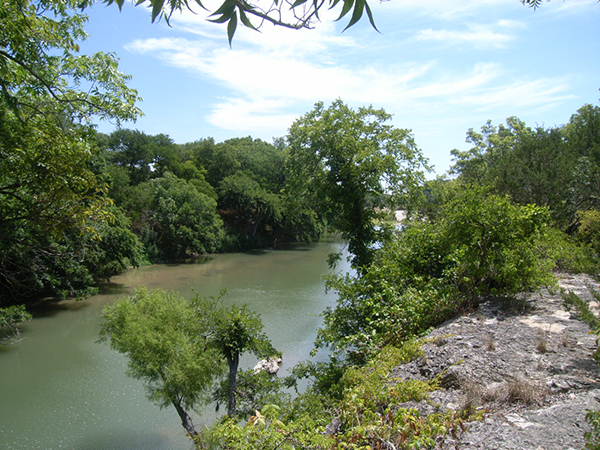
The event offers a whole-watershed approach that allows residents to have their private water well screened and their soil tested, and will also provide educational training on groundwater and surface water protection.
Event information
Samples can be dropped off from 8:30-10:30 a.m. on Nov. 19 at the Texas A&M AgriLife Extension Service office in Lampasas, 409 S. Pecan St., Suite 102.
The results and education meeting will be held from 9 a.m. to 2:30 p.m. at Grace Community Fellowship, 2974 U.S. Highway 281.
“The Texas Well Owner Network program is for Texas residents who depend on a household well for their water needs,” said Joel Pigg, AgriLife Extension program specialist and TWON coordinator, Texas A&M Department of Soil and Crop Sciences, Bryan-College Station.
“The Lone Star Healthy Streams education component aims to increase awareness of surface water pollution originating from livestock and feral hogs,” said Leanne Wiley, AgriLife Extension program specialist and LSHS coordinator, Department of Soil and Crop Sciences, Bryan-College Station. “It encourages implementation of proven best management practices.”
Workshop agenda
The Nov. 20 results and education meeting will offer three Texas Department of Agriculture continuing education units — two in integrated pest management and one general.
The topics to be covered include:
- Watersheds, water quality and grazing livestock best management practices — Wiley.
- Lampasas River Watershed Protection Plan update — Lisa Prcin, Texas A&M AgriLife Research senior research specialist, Temple.
- Feral hog management and demo — Jay Long, Texas A&M Natural Resources Institute project coordinator, Bryan-College Station.
- Updates from partners — Saratoga Underground Water Conservation District, Hill Country Soil and Water Conservation District and U.S. Department of Agriculture Natural Resource Conservation Service.
- Sample results — Pigg.
Sampling instructions:
- Pour the contents of a new 12-20-ounce bottle of water out and fill it with a water sample from your private water well.
- Take the sample directly from the spigot/hose bib nearest the wellhead.
- If an inside faucet is used, remove the aerator from the faucet before making the collection. Rinse and dry the exterior of the faucet to prevent contamination of the water sample.
- If possible, wipe with a Clorox-type towelette or paper towel wetted with a light bleach solution to kill any bacteria present on the faucet. Allow the cleaning solution to dry before sampling.
- Turn the water on full force and let it run for 2 minutes or until the pump starts running.
- Reduce the water flow to a small stream, then take the sample.
- The sample should be collected within 24 hours of submission to ensure accurate results.
It is best to collect the sample on the day it is submitted. Keep the sample cool and transport it to the drop-off location in an ice chest as soon as possible after collection.
For more information, contact Pigg at j-pigg@tamu.edu or 979-321-5946, Wiley at leanne.wiley@ag.tamu.edu or 979-321-5950, or Prcin at lprcin@brc.tamus.edu or 804-350-5594.